
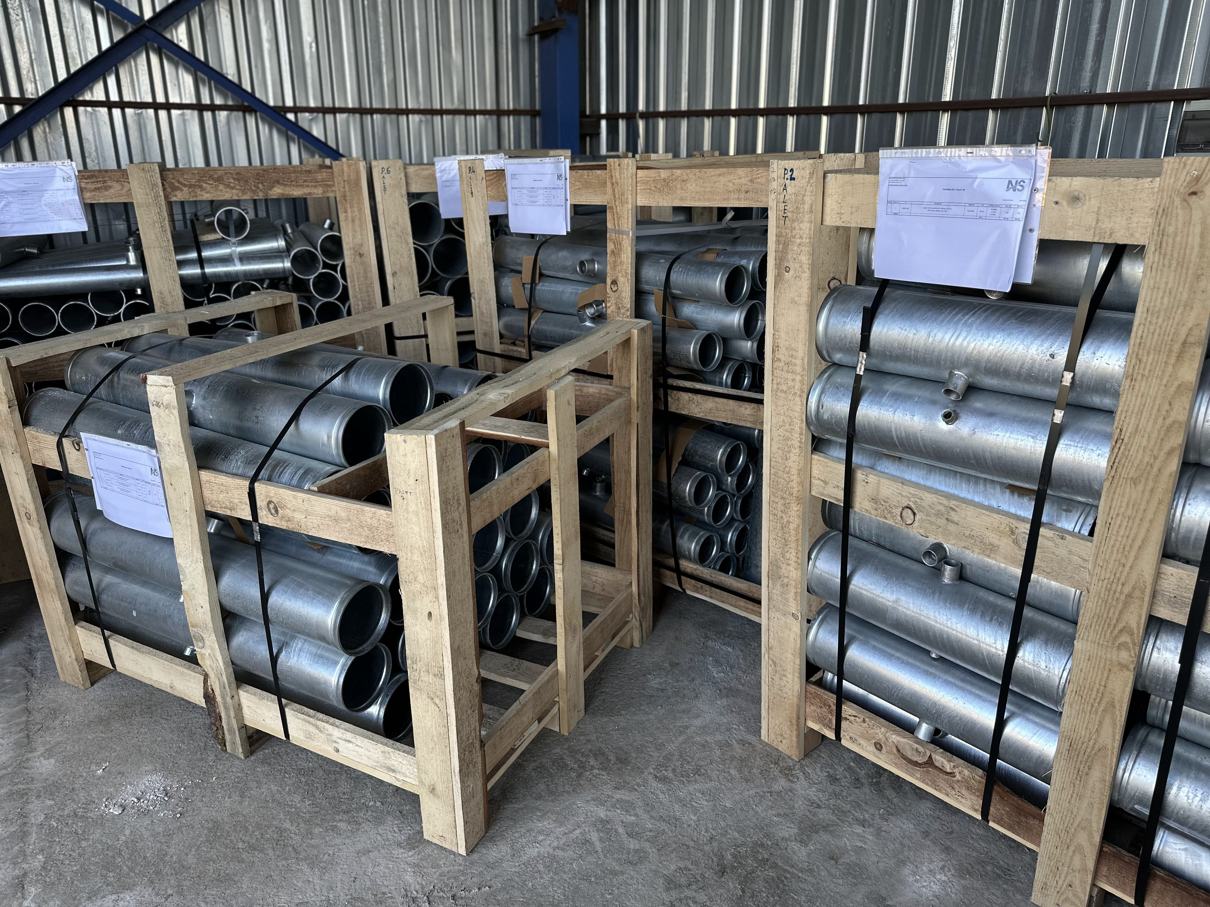
Novelty Structures is an experienced fabricator of Roll Grooving Pipes and Spools
Contents
Roll Grooved Pipes
In the world of metal fabrication and piping systems, roll grooving has become a staple technique for preparing pipes for quick, secure, and cost-effective installation. Especially popular in fire protection, HVAC, and industrial plumbing, roll grooving offers significant advantages over traditional joining methods like welding or threading.


What Is Roll Grooving?
Roll grooving is a cold forming process that creates a groove near the end of a pipe without removing any material. Using a roll grooving machine, a pipe is pressed between a grooving roll and a pressure roll. The pressure displaces the pipe material to form a circular groove around the outer surface while maintaining the integrity of the pipe wall.
This groove is then used to connect the pipe to another using a mechanical coupling—typically with a rubber gasket inside—which locks into the groove to form a strong, leak-tight joint.
Why Is it used?
There are several reasons roll grooving has become a preferred method in many industries:

Key Tips for Successful Roll Grooving
Roll Grooved Spool

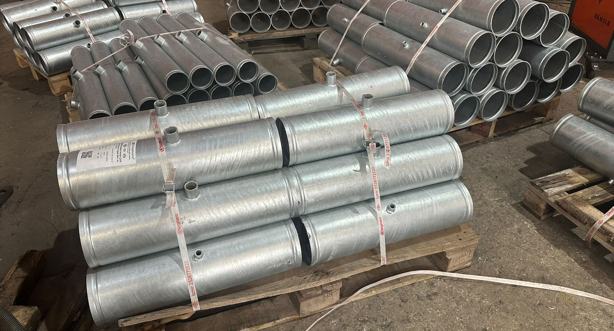
A roll grooved spool is a pre-fabricated section of pipe that has been roll grooved at one or both ends and is ready for installation within a piping system.
It’s essentially a “ready-to-go” segment of pipe—cut to length, cleaned, and grooved—so that it can be quickly connected using mechanical couplings on-site.
Roll grooved spools are most commonly used in systems that rely on grooved mechanical couplings—like those made by Victaulic or Gruvlok. These systems are common in:
The spools are brought to the construction site, aligned into the system, and joined quickly without welding using rubber-gasketed couplings that snap into the grooves.
Pipe Groove Standards
Victaulic roll grooving standards define the precise dimensions and tolerances required to form a groove at the end of a pipe so it can be joined using a mechanical coupling system by Victaulic.
These standards—commonly aligned with OGS (Original Groove System) and industry specifications such as AWWA C606—control critical dimensions including groove diameter, depth, width, and position from the pipe end. Maintaining these tolerances is essential to guarantee proper coupling engagement, gasket sealing, and long-term system performance.
How We Perform Roll Grooving
At our facility, roll grooving is carried out using calibrated, purpose-built grooving machines operated by experienced technicians. The process includes:
- Pipe Preparation – Each pipe is cut square, deburred, and inspected to ensure it meets the required outside diameter and wall thickness tolerances.
- Machine Setup – Grooving rollers are selected and set according to the pipe size and specification, following Victaulic standard parameters.
- Cold Forming Process – The pipe is rotated while hardened rollers gradually press and form the groove into the pipe surface without material removal.
- Dimensional Verification – Every groove is checked using calibrated gauges to confirm compliance with required groove dimensions and tolerances.
- Quality Inspection – Finished grooves are visually inspected for uniformity, smooth profile, and absence of deformation or defects.
By strictly adhering to Victaulic roll grooving standards, we ensure that every grooved pipe we produce is fully compatible with mechanical coupling systems, delivering strength, efficiency, and long-term reliability across HVAC, fire protection, and industrial piping applications.
How can we help you ?
Contact us to discuss our roll grooving pipe fabrication services.

