Novelty Structures manufactures Carbon Steel, Stainless Steel and Aluminium Silos in our Facilities in Turkey.
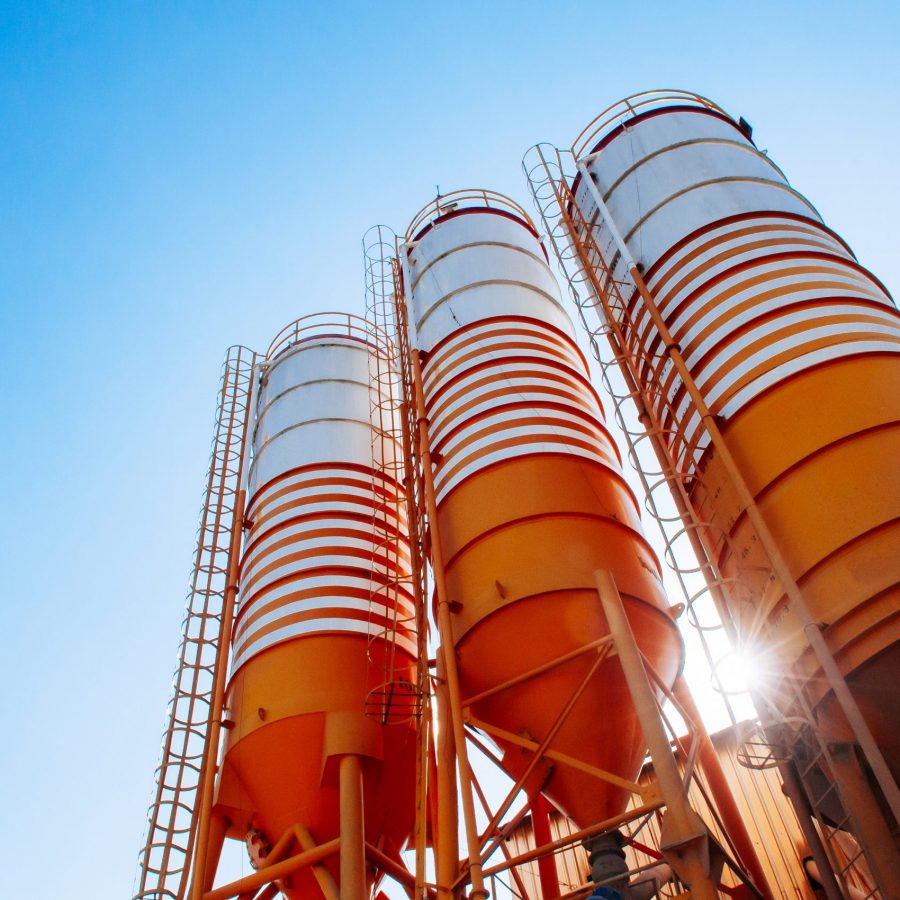
Steel Silos

Steel Silos are essential storage structures used across various industries to hold bulk materials such as grains, cement, chemicals, and food products.

Silo fabrication involves careful consideration of materials, structural design, and application requirements.

Common materials used in silo construction include aluminium, carbon steel, and stainless steel, each offering distinct advantages depending on the stored material and environmental conditions.

Types of Silos
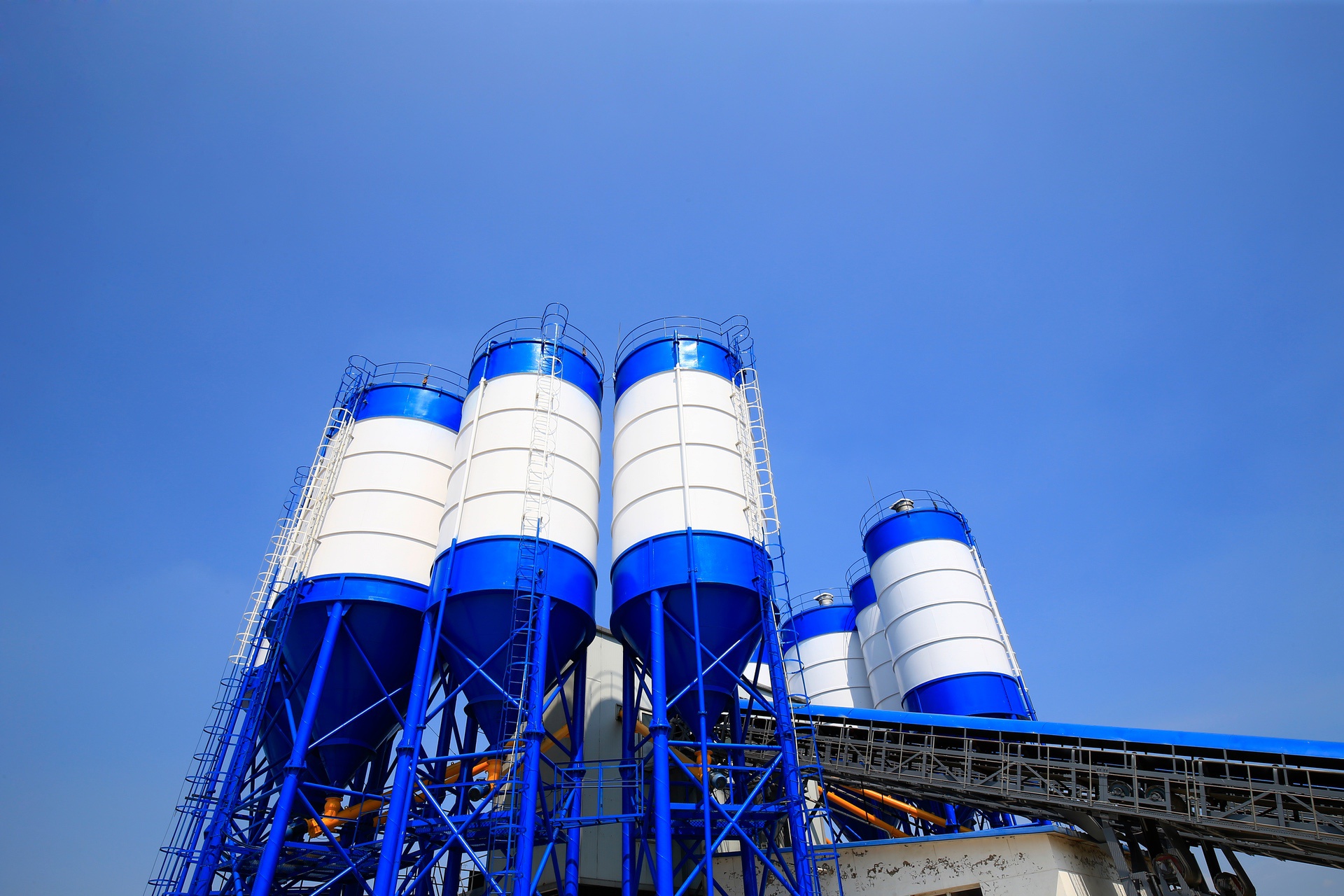
Flat-Bottom Silos

Used to store liquids, gases, or bulk solids for long periods.

  • No sloping bottom, making them simpler and less expensive to construct than hopper-bottom silos.

  • Requires mechanical assistance (e.g., augers, scrapers, or front-end loaders) for complete material discharge
  • Ideal for long-term storage of bulk materials due to their high volume-to-footprint ratio.

  • Manual or mechanical discharging systems: Sweep augers (rotating arms that move material to a central discharge point). Chain conveyors or belt conveyors for automated discharge. Front-end loaders for manual removal in some cases.

  • Supported by a ring beam foundation or concrete slab

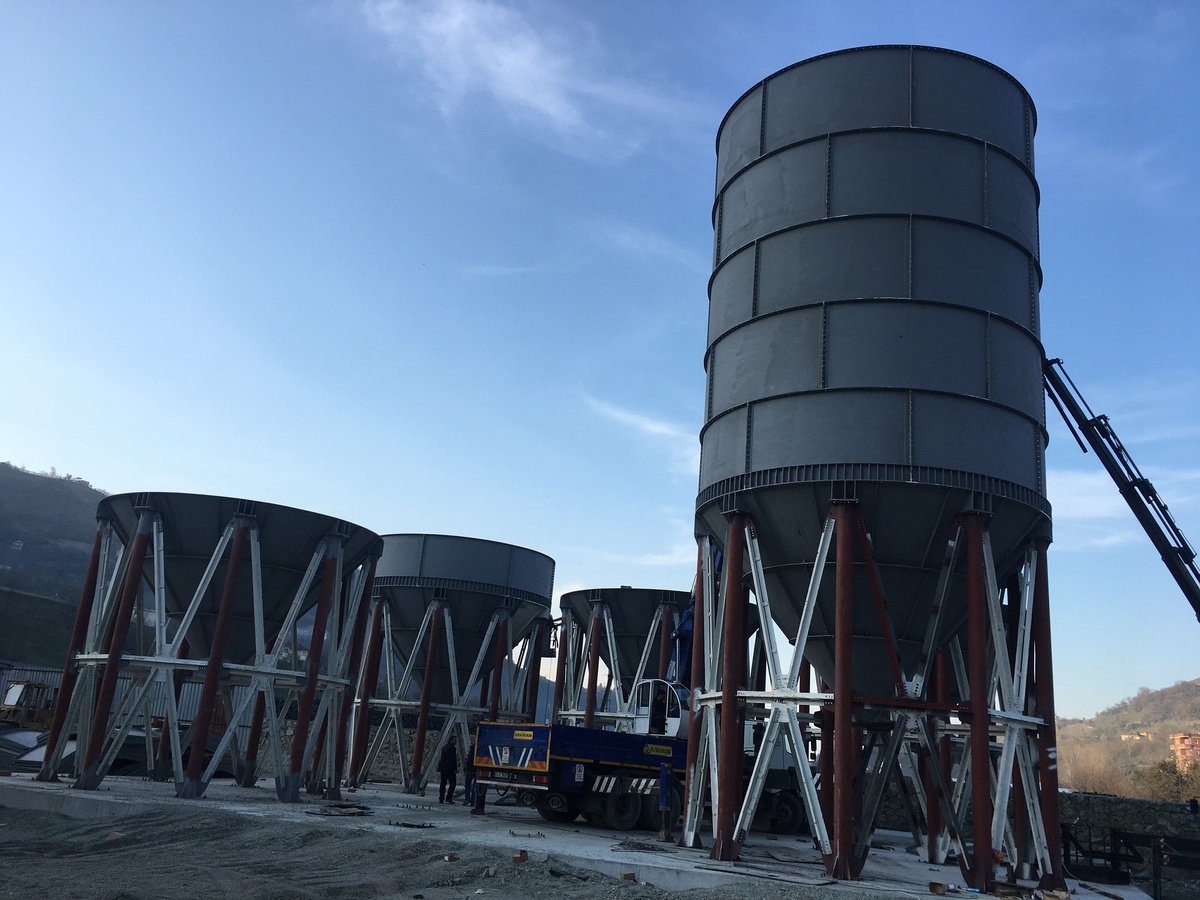
Hopper Silos

Used in various manufacturing or chemical processing operations.

  • The hopper angle (typically 45°–60°) ensures material flows toward the discharge point by gravity.
  • Flow Patterns: Mass flow (all material moves uniformly, preventing segregation). Funnel flow (center material discharges first).

  • Requires strong steel  support legs or a frame to hold the hopper section.
  • Discharge Mechanism: Gravity-driven flow (no need for sweep augers in most cases). Vibrators or air fluidizers may be used to prevent material bridging. Slide gates, rotary valves, or screw conveyors control the discharge rate.
  • Ideal for free-flowing powders and temporary applications.
Silo Construction

Materials of Silos

Carbon Steel Silos


  • High strength and durability for heavy-duty applications.
  • Cost-effective compared to stainless steel.

  • Can be galvanized or painted for corrosion resistance.

Applications

  • Cement and fly ash storage
  • Wood & Biomass
  • Mining and mineral processing

Stainless Steel Silos


  • Excellent corrosion resistance, even in aggressive environments.
  • Easy to clean and maintain, meeting sanitary standards.
  • Long lifespan with minimal degradation.

Applications

  • Dairy and liquid storage
  • Chemical and pharmaceuticals
  • High-hygiene food processing

Aluminium Silos


  • Corrosion-resistant, making it suitable for food-grade applications.
  • Lightweight yet durable, reducing structural support requirements.
  • Non-reactive with many substances, ensuring material purity.

Applications

  • Food and beverage storage
  • Pharmaceutical ingredients
  • Lightweight chemical storage

Modern Silo Fabrication

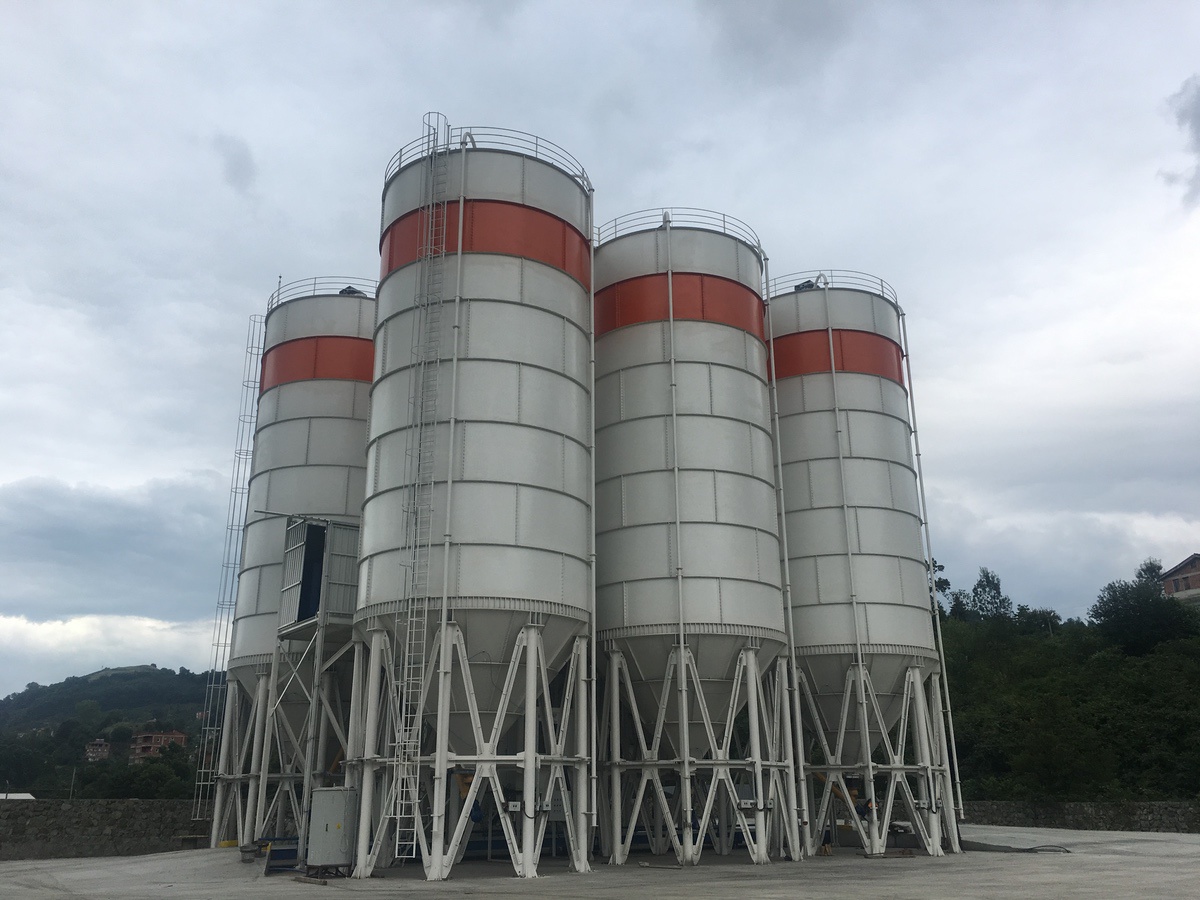
Modular Silo Structures

  • Easy Expansion: Additional modules can be added as storage needs grow.
  • Portability: Bolted designs allow relocation if required.
  • Faster Installation: Pre-fabricated sections reduce on-site construction time.
stainless silo

Manufacturing Precision

  • Cutting and Forming Accuracy: Achieving precise cuts and forming curved sections without warping the steel is a key challenge in silo fabrication, especially for thick plates or hopper silos.

  • Dimensional Consistency: Maintaining dimensional accuracy in large or complicated silo designs is difficult, as minor errors can cause fit-up problems during installation.

  • Surface Preparation: Preparing steel surfaces for painting is labor-intensive and requires strict quality controls to ensure long-term corrosion protection.

Quality Assurance and Testing

  • Welding Quality: Welding must be flawless to ensure structural integrity and leak prevention, requiring skilled labor and rigorous inspections.

  • NDT:Non-destructive testing of silo welds shall be employed to assess weld quality against the applicable quality standards.
  • Coating & Finishing Quality: It is crucial for ensuring longevity, corrosion resistance, and structural integrity, especially in harsh environments.

Manufacturing Challanges

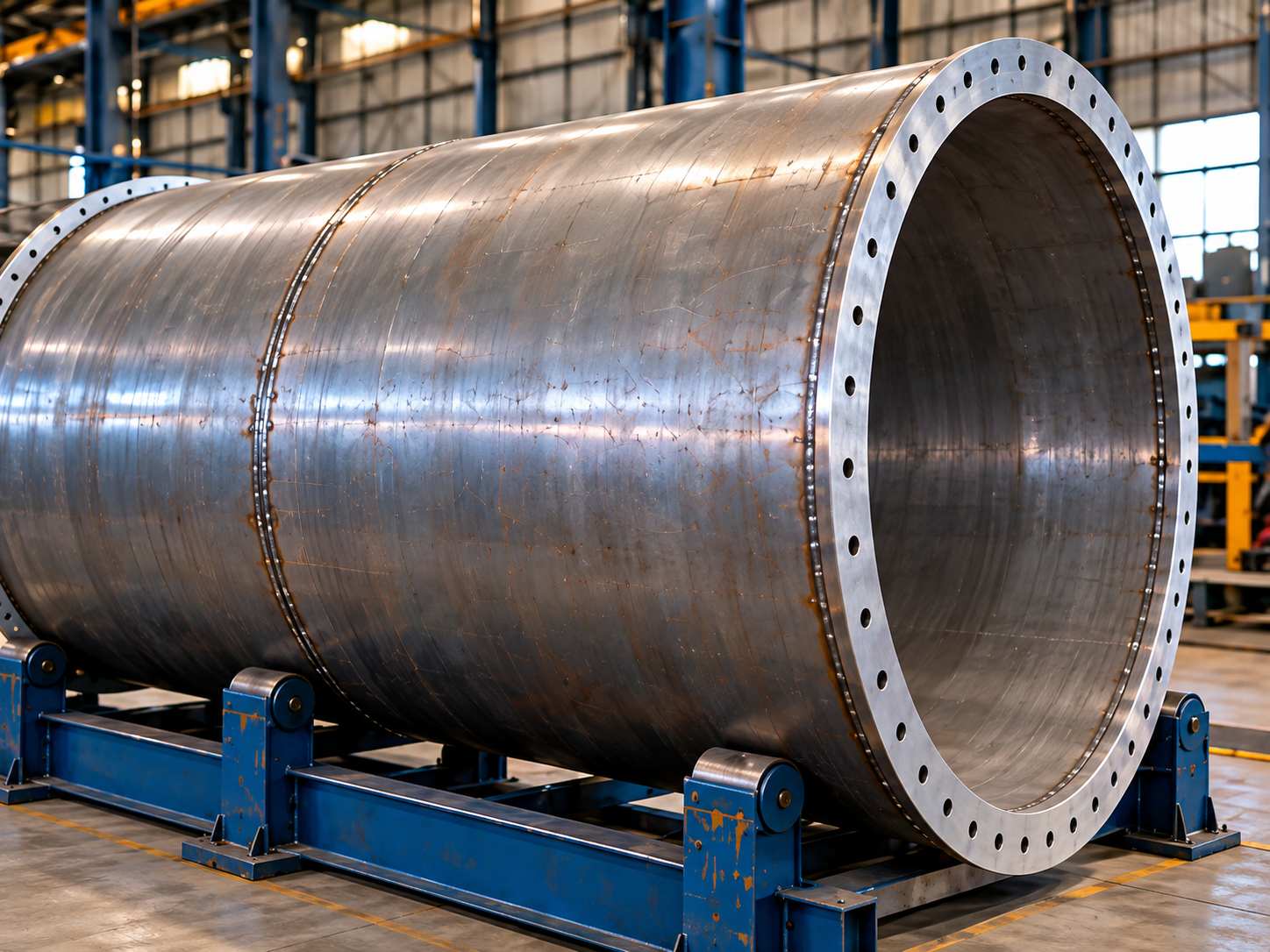
Keeping Silo Sections Within Tolerance During Welding

One of the practical challenges in silo fabrication is maintaining the specified geometry through welding. A rolled section may meet dimensional requirements before welding, then move as the welds cool. If this movement is discovered after flanges and stiffeners have been completed, correction can become more difficult

steel silo manufacturing steps

Check at key stages

The manufacturing sequence should therefore include checks at key stages:

  • ✔ After forming
  • ✔ During fit-up
  • ✔ After welding and cooling

Depending on the approved drawings, these checks may cover shell roundness, flange flatness and the position of connecting features.

Control movement early

Welding sequence, joint preparation and suitable fixtures help control movement. Checking dimensions while the section remains accessible allows deviations to be addressed before further fabrication or finishing makes correction more complicated.

Verify before release

The result to aim for is a completed component whose dimensions have been verified against the drawing, with any necessary corrections resolved before release.

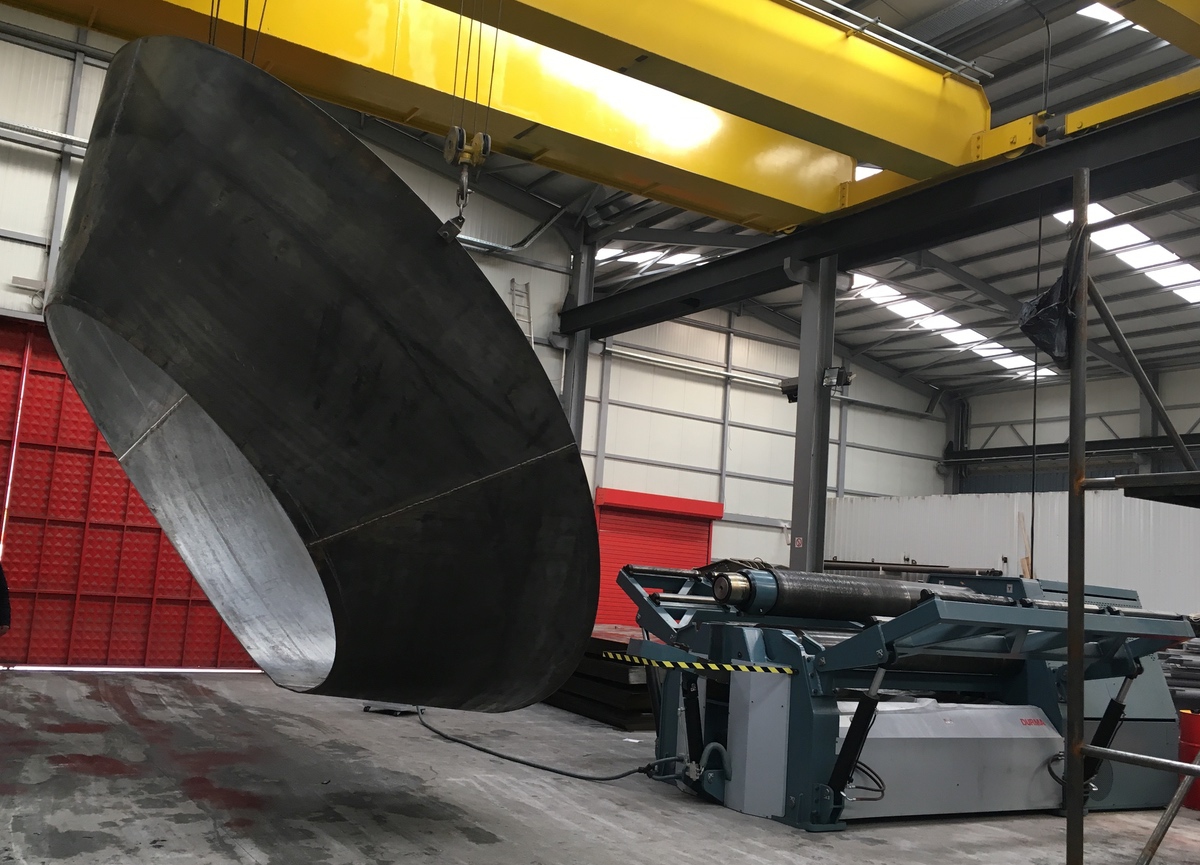
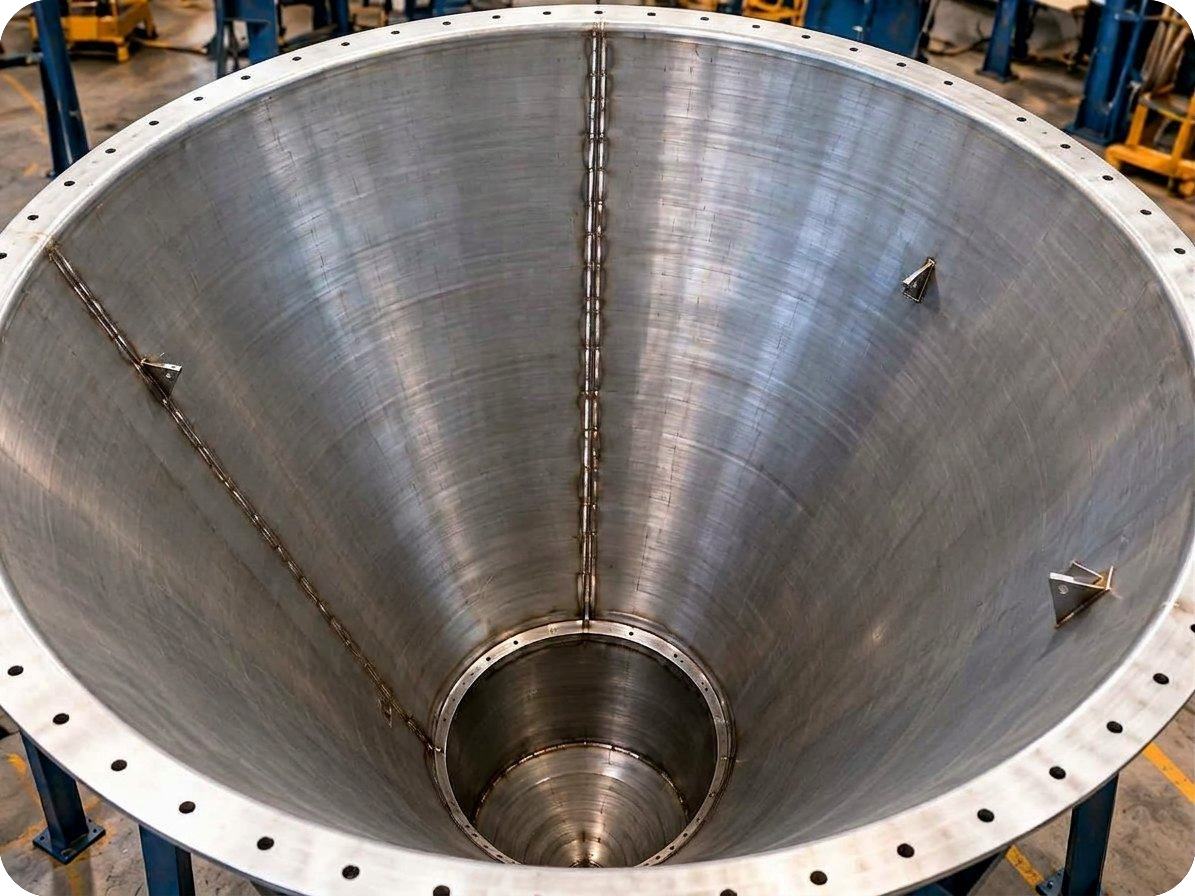
Preparing Silo Cones for a Specified Lining

Lined silo cones introduce additional requirements into steel fabrication. Attachment positions, internal weld finish and coating boundaries may all affect whether the completed cone is ready to receive the specified lining.

Resolve details before fabrication

These details need to be resolved before the relevant workshop operations begin. Missing attachments or unclear surface requirements can otherwise lead to additional cutting, welding or surface preparation on already finished steelwork.

Inspect against the specification

The approved fabrication drawings should incorporate the requirements supplied by the customer or lining specialist. Inspection can then verify the attachment features and specified internal finish while they remain accessible.

Confirm readiness

This approach gives the workshop clear acceptance criteria and helps prevent completed cones from reaching the next supplier with unresolved fabrication details.

Silo Cone Manufacturing

Silo Cone Manufacturing

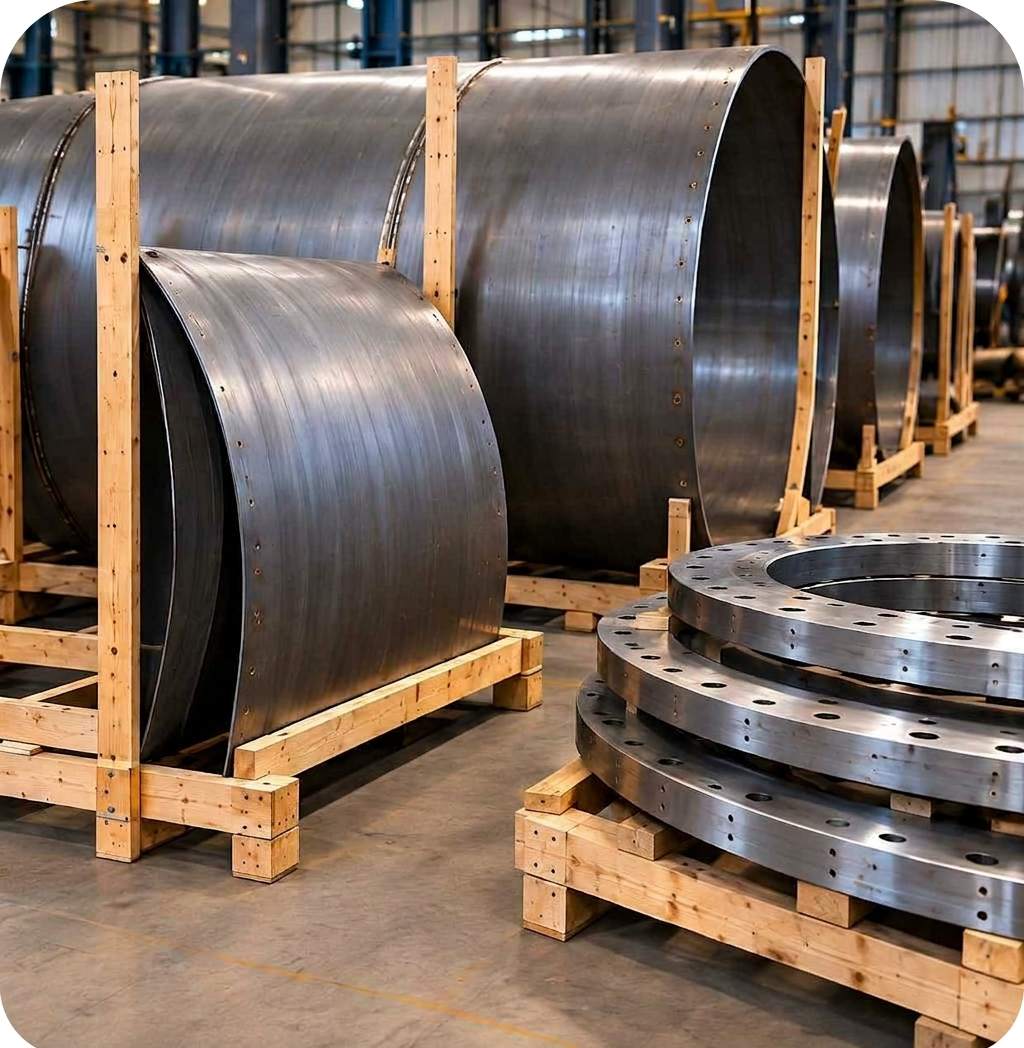
Checking Silo Components Before Dispatch

For a silo supplied in sections, the quality of the delivery depends on how accurately the individual components have been manufactured and identified. Connecting edges, flanges and fixing positions need particular attention because discrepancies may only become apparent when adjoining parts are brought together.

Check the features that govern fit

Workshop checks should focus on the dimensions that govern fit:

  • ✔ Hole spacing on flanges and specified connections
  • ✔ Formed angles and flange dimensions
  • ✔ Connection orientation

Where agreed, selected mating components can be checked together before finishing.

Identify every component

Identification is equally important when a shipment contains repeated or similar-looking parts. Component marks should correspond to the approved drawings and packing list, allowing the customer to distinguish shell sections, cone segments and supporting steelwork.

Review before delivery

A final review of the agreed inspection records and component list connects the manufacturing checks to the items being dispatched. It also provides an opportunity to resolve missing parts or identification discrepancies before delivery.

How can we help you ?

Silos are indispensable to industrial projects, and their success depends on the careful selection of contractors, stringent quality control, and compliance with global standards.

Novelty Structures stands out as a reliable silo manufacturer providing high-quality bulk material storage silos tailored to demanding industrial needs.

Contact our team to further discuss your needs.

Completed Projects

Products

Steel Structures

Plant Engineering Fabrications

Bulk Material Handling Structures 

Steel Buildings

Steel Silos

Hoppers & Chutes

Steel Trusses

Mezzanines & Stairs

Steel Tanks

Services

Laser Cutting 

Metal Bending

Plate Rolling

Machining

Welding

Painting