
What is welding ?
Metal welding is a method of connecting two separate metal objects (same or different metals) by bonding through appropriate ways. Although methods will vary, from the thinnest plate to the thickest plate, majority of the metals can be welded by one or more welding methods. The material characteristics (such as melting point, ductility, electrical conductivity, yield strength, and plasticity, etc.) determines the difficulty of welding and appropriate welding method. There are various welding tests to identify welding defects.
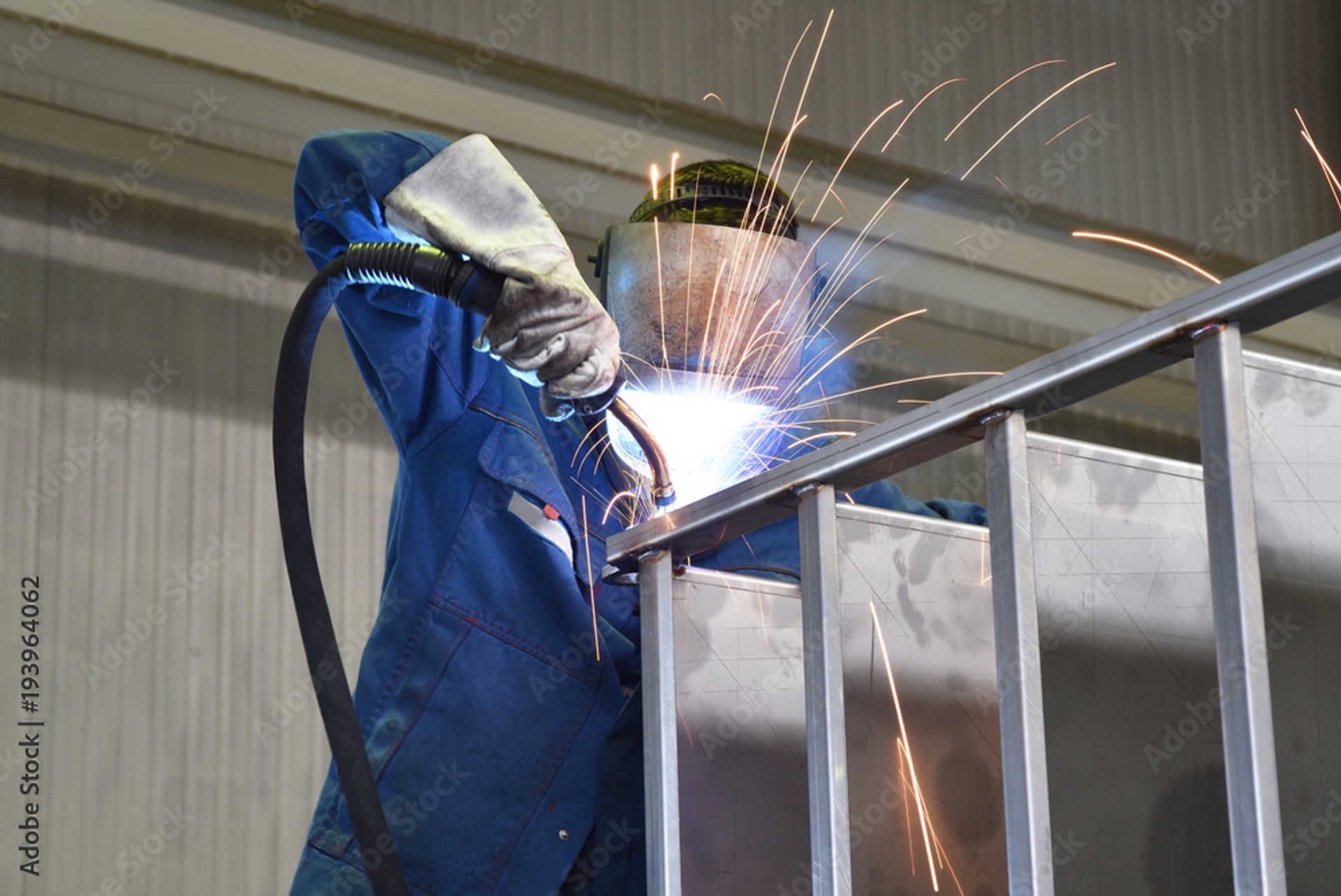
Welding Different Metals


Comparison of Welding Metals
| Property | Carbon Steel | Stainless Steel | Aluminium |
|---|---|---|---|
| Ease of Welding | Relatively easy to weld, highly weldable. | Moderate difficulty; requires care with heat. | Difficult; requires specialized techniques. |
| Melting Point | ~1425–1540°C (2597–2800°F) | ~1370–1530°C (2498–2786°F) | ~660°C (1220°F) |
| Common Welding Methods | SMAW, GMAW, FCAW, TIG, and MIG. | TIG, MIG, and stick welding (SMAW). | TIG, MIG, and sometimes resistance welding. |
| Pre-weld Preparation | Moderate prep; cleaning to remove rust, oil. | Extensive cleaning to avoid contamination. | Extensive cleaning (oxide removal essential). |
| Thermal Conductivity | Low to moderate. | Low; retains heat in the weld zone. | High; dissipates heat quickly. |
| Heat Input Control | Moderate control needed. | Requires precise control to avoid warping. | High control due to risk of overheating. |
| Challenges | Risk of porosity and distortion. | Susceptible to thermal expansion and warping. | Oxide layer requires removal. |
| Shielding Gas | CO₂, or CO₂ + Argon mix. | Argon or Helium + Argon mix. | 100% Argon (sometimes Helium mix). |
| Welding Speed | Moderate speed, depending on thickness. | Slower due to precision requirements. | Fast due to low melting point. |
| Post-Weld Treatment | Stress-relieving recommended for thick sections. | Cleaning or passivation for corrosion resistance. | May require anodizing or finishing. |
| Durability of Welds | Strong and durable; depends on filler material. | High strength and corrosion resistance. | Lighter but weaker if not heat-treated properly. |
| Corrosion Resistance | Low; prone to rust without coating. | High; inherent corrosion resistance. | High; forms protective oxide layer. |
| Cost of Welding | Low to moderate. | Moderate to high. | High due to specialized equipment and skill. |
| Applications | Structural steel, pipelines, machinery. | Food industry, medical devices, aerospace. | Aerospace, automotive, shipbuilding |
Welding Joints
Butt Welding
- A butt joint refers to two metal pieces located side by side for welding. A preliminary edge preparation is essential for a high quality welding outcome.
- The butt weld is relatively easier than the other joints and it withstands stress better than the others.
- It is the most common welding joint in fabricating structures.
Corner Welding
- Corner joints are very similar to Tee joints.
- The main difference is the location of the metal is positioned.
- In Tee joint, one metal is positioned in the center of the other, whereas in corner joints work pieces meet in the corner forming an ‘L’ shape.
Tee Welding
- Tee welding joints are created when two metal parts intersect at a 90° angle.
- This results in the edges getting together in the centre of a component in a ‘T’ shape.
- Tee joints are also a type of fillet weld.

Lap Welding
- Lap joint refers to a joint when one part laps onto the other one.
- The welding between the two parts is done by a fillet weld.
- The major shortcoming of the lap joint is that some area below the weld pool is prone to rust.
Edge Welding
- The edge welding joint is used to join parts that are parallel to each other.
- Edge joints are often used for sheet metal welding
- A cleaner and smoother weld surface than a butt joint.

