
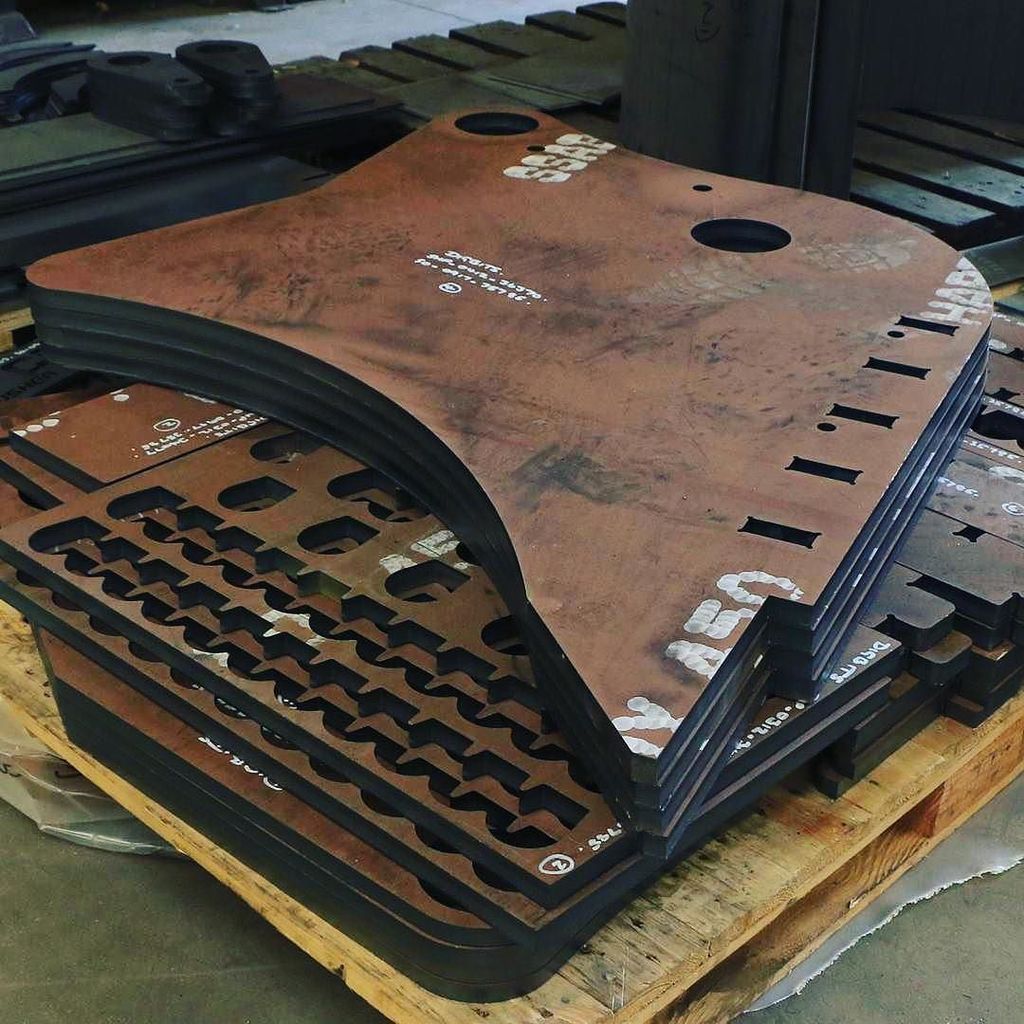
Comparison of Hardox Grades: Hardness, Ductility, Bendability and Weldability
Contents
- Hardox 400
- Hardox 450
- Hardox 500 Tuf
- Hardox 600
- Hardox Extreme
- Which grade should I choose for my application?
- How does Hardox HiTuf differ from other grades?
- Can Hardox grades be welded and machined?
- How does thickness affect Hardox performance?
- Are Hardox grades customizable for specific needs?
- What factors should I consider when comparing Hardox grades?
- What are the typical applications for each grade?
- What are the welding requirements for Hardox grades?
- What is the difference between Hardox 500 and 600?
- How does Hardox 450 compare to Hardox 400?
- How does thickness affect the choice of Hardox grade?
- Can Hardox grades be used interchangeably?
- 1. The Multi-Steel Bucket: Tailoring Grades to Local Stress
- 2. The Tipper Body Dilemma: Shaving Weight without Sacrificing Life
- 3. Soil-Working Implements: Keeping the Cutting Edge Sharp
- 4. Bulk Mining Logistics: Taming Continuous Ore Abrasion
Comparison of Hardox Steel Grades

Comparison of Hardox Applications
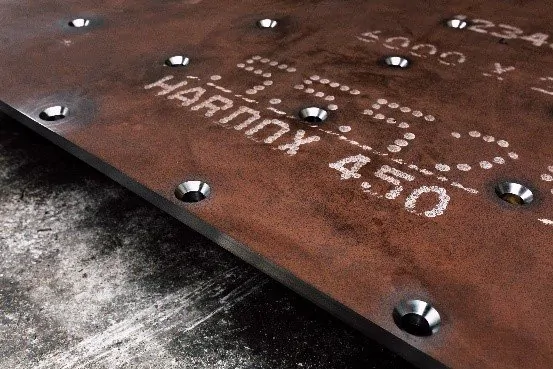
Hardox Grades in Various Field Case Studies
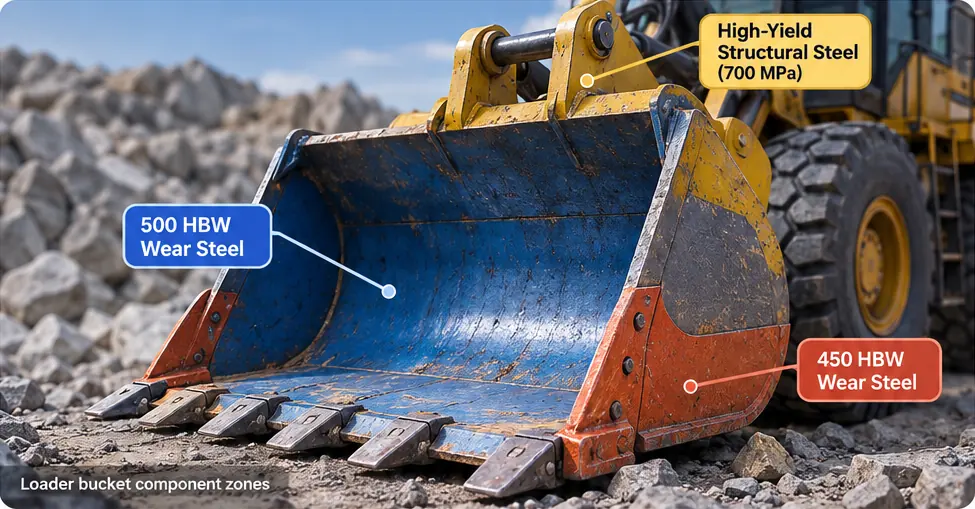
1. The Multi-Steel Bucket: Tailoring Grades to Local Stress
Imagine a loader bucket diving headfirst into jagged, abrasive rock piles thousands of times a season. The instinct of many equipment designers is to build the entire assembly out of a single grade of extra-hard steel. However, uniform hardness across a complex geometry creates subtle flaws: non-wearing structural joints end up unnecessarily heavy or prone to cracking, while extreme wear zones consume metal too quickly.
An innovative heavy equipment manufacturer took a different path by mapping stress vectors across the bucket’s geometry and assigning specialised steel grades component by component.
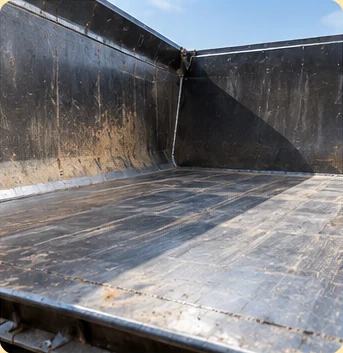
2. The Tipper Body Dilemma: Shaving Weight without Sacrificing Life
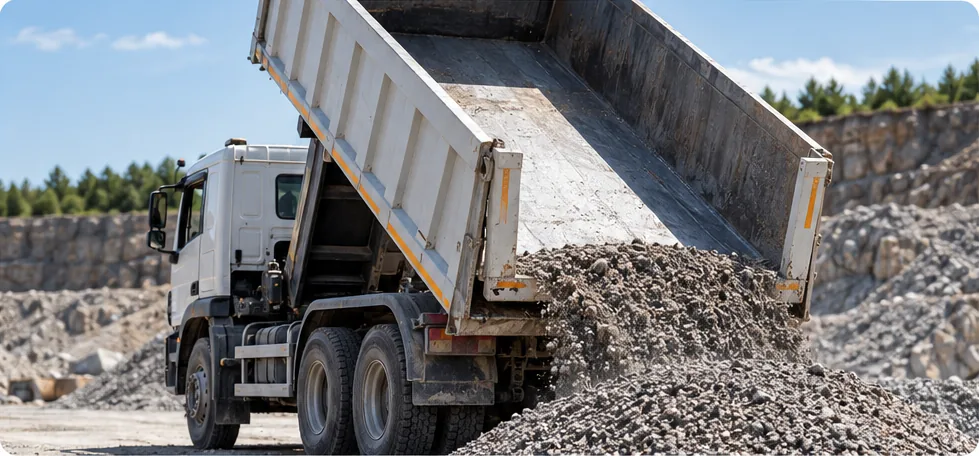
In commercial transport, fleet operators face a perpetual trade-off: every extra kilogram of steel built into a dump truck body is a kilogram of lost revenue-generating payload. Yet simply trimming plate thickness on standard wear steel risks premature floor abrasion and costly structural failure.
An agile body manufacturer solved this by upgrading the wear plate grade to unlock structural redesign opportunities:
| Design Metric | Baseline Specification | Redesigned Tipper Body | Operational Advantage |
|---|---|---|---|
| Material Grade | Hardox 450 | Hardox 500 TUF | Higher hardness enables thinner plate selection |
| Floor Plate Thickness | 8.0 mm | 6 mm | 25% reduction in plate thickness |
| Tare Body Weight | Baseline | -850 kg total weight | +850 kg additional legal payload per trip |
| Service Life | Baseline | 100% Retained | Zero compromise on operating lifespan |
3. Soil-Working Implements: Keeping the Cutting Edge Sharp
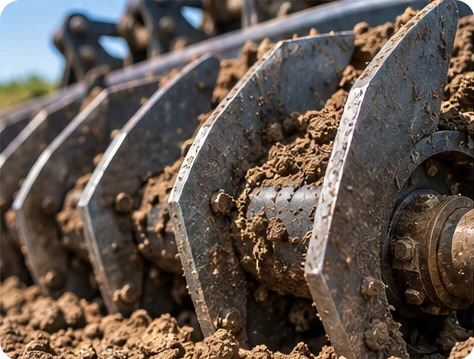
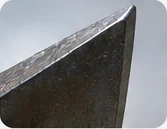
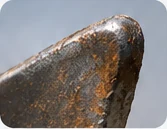
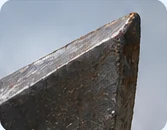
Agricultural tiller blades operate in a punishing environment of abrasive soil, sand, and plant residue. As conventional carbon steel blades wear down, their leading edges dull into rounded, blunt wedges. The tractor engine must work significantly harder to force blunt blades through the dirt, burning extra fuel and slowing down field operations.
An agricultural equipment designer replaced traditional 10 mm carbon structural steel blades with 6 mm Hardox 500 wear steel fins.




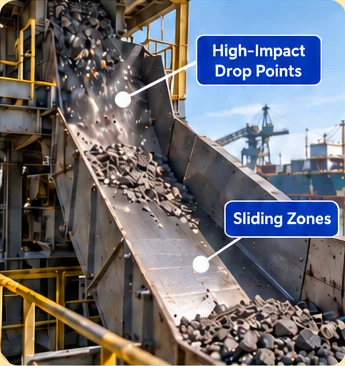
4. Bulk Mining Logistics: Taming Continuous Ore Abrasion
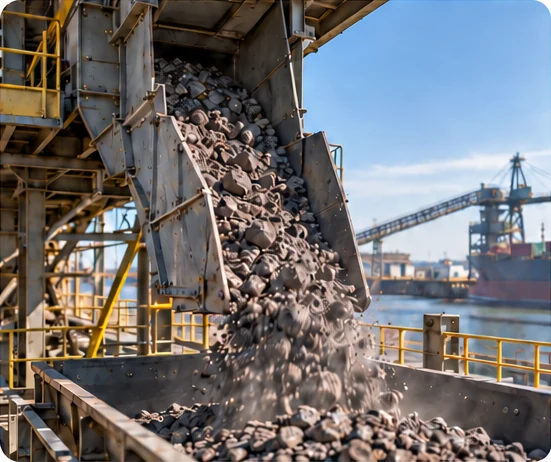
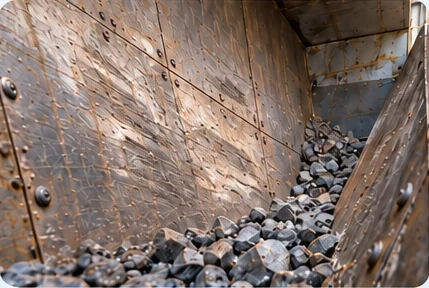
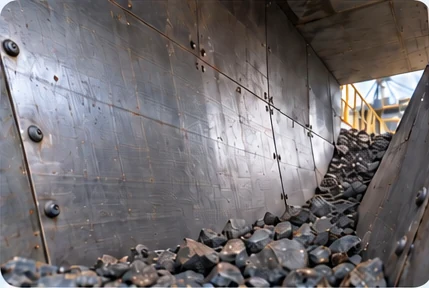
At a high-volume port facility transferring millions of tons of crushed mineral ore annually, unscheduled downtime is extraordinarily expensive. Continuous streams of coarse, heavy ore acted like industrial sandpaper against transfer chutes and skips, wearing through standard liners and forcing emergency maintenance halts every few weeks.
Engineers replaced conventional Hardox 400/450 chute liners in extreme wear zones with Hardox 600 ultra-hard wear plate.
Conclusion
The variety of dimensions and grades make Hardox steel suitable for a wide range of designs and products.
Hardox steel keeps getting more versatile over the years with new grades and dimensions are introduced regularly.
Understanding the nature of the hardox grade will facilitate the metal fabrication processes.
The traditional Hardox wear plate has been complemented with tubes and round bars in the last years.

FAQ
Your choice depends on the application requirements:
- For moderate wear and impact: Hardox 400 or 450.
- For high wear with minimal impact: Hardox 500 or 550/600.
- For structural applications with high toughness needs: Hardox HiTuf.
Hardox HiTuf prioritizes impact toughness over extreme hardness. It is ideal for applications that experience heavy impact loads and where cracking or brittleness must be avoided.
Yes, all Hardox grades can be welded and machined. However:
- Higher grades like Hardox 500/600 require preheating and specialized tools due to their higher hardness.
- Hardox HiTuf is easier to work with because of its lower hardness.
The performance of Hardox steel depends on its thickness:
- Thinner plates tend to retain higher toughness.
- For thicker plates, you may need to select a lower hardness grade to maintain adequate ductility.
Novelty Structures offer customized Hardox solutions, such as tailored plate dimensions and coatings. Specific grades like Hardox Extreme are also available for niche applications requiring ultra-high hardness.
When choosing between Hardox grades, consider these factors:
- Wear Resistance: Higher grades like Hardox 500/600 offer superior resistance to abrasive wear.
- Toughness: Grades like Hardox 400 or HiTuf have better toughness, making them suitable for impact-heavy environments.
- Weldability and Machinability: Lower grades (e.g., Hardox 400) are easier to work with, while higher grades may require specialized techniques.
- Thickness: Thickness influences the balance of toughness and hardness. Thicker plates may demand lower hardness to maintain structural integrity.
- Cost: Higher hardness grades generally cost more due to their advanced processing.
- Application: Match the grade to your specific application—e.g., mining buckets require high abrasion resistance (Hardox 500), while truck bodies may use Hardox 400 or 450.
| Grade | Applications |
| Hardox 400 | Dump truck bodies, conveyors, wear liners, bins, silos, chutes, and hoppers. |
| Hardox 450 | Loader buckets, cutting edges, crushers, containers, and concrete mixers. |
| Hardox 500 | Crushers, screens, wear plates, buckets for heavy-duty excavators. |
| Hardox 550 | Cement plants, coal chutes, sand slingers, and hammers. |
| Hardox 600 | Extreme abrasion environments like mining blades, extreme wear liners, and fans. |
| Hardox HiTuf | Structural applications, such as components for heavy machinery or bridges. |
Welding Hardox steel requires care, especially for higher hardness grades. Key guidelines include:
- Preheating: Required for grades 500 and above to reduce the risk of cracking.
- Controlled Cooling: Avoid rapid cooling after welding to maintain structural integrity.
- Matching Electrodes: Use electrodes or filler materials designed for AR steels.
- Avoid Overheating: Excessive heat can reduce hardness in the heat-affected zone (HAZ).
- Hardox 500: Balances wear resistance with moderate toughness, making it suitable for heavy-duty applications like crushers and mining buckets.
- Hardox 600: Prioritizes extreme wear resistance at the cost of reduced toughness. It is ideal for environments with little to no impact stress but intense abrasion.
- Hardox 450 has higher wear resistance (450 HBW vs. 400 HBW) and is slightly harder, making it suitable for applications where components face higher levels of abrasion.
- Hardox 400, while slightly softer, offers better machinability and toughness, making it easier to fabricate and weld.
Thicker plates of Hardox steel naturally become less tough due to the increased hardness. For example:
- Hardox 400: Works well even in thicker sections.
- Hardox 500/600: Recommended for thinner plates or where impact stresses are minimal.
While Hardox grades share similarities, they are optimized for different tasks. Using the wrong grade can result in:
- Reduced lifespan: Using Hardox 400 where Hardox 500 is needed may lead to premature wear.
- Higher costs: Using Hardox 500 where Hardox 400 suffices might be unnecessary and increase expenses.
- Structural failure: Choosing Hardox 600 for impact-heavy applications could result in cracking.
How can we help you ?
Hardox Steel is widely used in industrial projects and their success depends on the careful selection of contractors
Novelty Structures stands out as a reliable partner in providing high-quality Hardox Steel Parts tailored to demanding industrial needs.
Knowledge Hub

