

Steel paint types explained: alkyd, acrylic, epoxy, polyurethane and zinc primers, matched to EN ISO 12944 corrosivity categories and durability.
Contents

Steel spray painting
Paint for steel does two jobs: it keeps corrosion away from the steel and it gives the structure its finish. Which paint suits a job depends less on the product name than on where the steel will sit and how long the protection has to last. This page explains the main types of paint for steel, how they combine into a paint system, and how a system is matched to the environment under EN ISO 12944. Novelty Steel is a Turkey-based steel fabricator that paints steelwork in its own shop as part of fabrication.
A paint system, not a single paint
Protective painting is rarely one product. A system is built in layers, and EN ISO 12944-5 sets them out as priming coats, intermediate coats and topcoats.
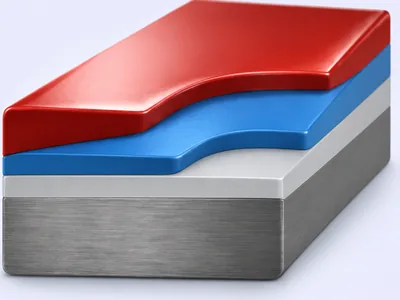
Primer goes onto the prepared steel. It provides adhesion and the first corrosion protection. Zinc-rich primers also protect the steel sacrificially.
Intermediate coat builds thickness and acts as a barrier. Epoxy is the usual choice.
Topcoat takes the weather, the light and the handling, and sets the colour and gloss. Polyurethane and acrylic are the usual choices.
Total dry film thickness, measured in micrometres, is what the specification is really controlling. In the 2018 revision of the standard the dry film thickness figures became normative rather than informative, so a system that falls short of the stated thickness no longer meets the standard.
Types of paint for steel
EN ISO 12944-5 lists the generic paint types used for structural steel. These are the ones that come up most often.
Acrylic paints
Water-based or solvent-based coatings with excellent colour and gloss retention, good durability and good adhesion to many substrates. Their colour retention makes them common on architectural and outdoor steelwork. They cost more than alkyds.
Epoxy paints
Two-component paints mixed with a hardener, giving better corrosion protection than alkyds. Widely used in moderately corrosive industrial environments, with good heat resistance and strong adhesion to steel. Epoxies chalk and lose colour in sunlight, so a polyurethane topcoat is normally applied over an epoxy primer and intermediate coat. They cost more than alkyd systems.
Polyurethane paints
Known for chemical resistance, clarity, high gloss, hardness, flexibility and abrasion resistance. Most often used as the topcoat over epoxy, for the colour and gloss retention that epoxy lacks.
Zinc-rich primers
The highest order of protection of the prefabrication primers. The zinc corrodes sacrificially in preference to the steel. Common in marine and corrosive industrial environments, and the usual answer when hot-dip galvanizing is not possible. Applied in the workshop, and liable to crack if put on too thick.
Others you may see specified
Ethyl silicate, polyaspartic and polysiloxane paints also appear in EN ISO 12944-5. Polyaspartic and polysiloxane topcoats are specified where long colour retention or fast return to service matters.
Matching paint to the environment
EN ISO 12944 is the standard for corrosion protection of steel structures by protective paint systems. It classifies environments by how corrosive they are, which is how a system gets chosen.
| Category | Corrosivity | Typical exterior | Typical interior |
|---|---|---|---|
| C1 | Very low | Not applicable | Heated buildings with clean air: offices, shops, schools |
| C2 | Low | Low pollution, mostly rural | Unheated buildings where condensation occurs: depots, sports halls |
| C3 | Medium | Urban and industrial areas, coastal areas with low salinity | Production rooms with high humidity and some air pollution |
| C4 | High | Industrial areas, coastal areas with moderate salinity | Chemical plants, swimming pools, boatyards |
| C5 | Very high | Industrial areas with high humidity and aggressive atmosphere, high-salinity coastal | Buildings with almost permanent condensation and high pollution |
| CX | Extreme | Offshore structures and related areas | Not applicable |
Four immersion categories, Im1 to Im4, cover steel in water, in soil and in splash and tidal zones. The 2018 revision changed two things worth knowing. The separate C5-I and C5-M categories were merged into a single C5 for land-based structures, and CX was added for offshore.
How long the protection lasts
The standard expresses durability as the time to the first major maintenance painting, not as a guarantee.
| Range | Abbreviation | Time to first major maintenance |
|---|---|---|
| Low | L | Up to 7 years |
| Medium | M | 7 to 15 years |
| High | H | 15 to 25 years |
| Very high | VH | More than 25 years |
Very high durability is the category added in the 2018 revision. Pick the corrosivity category and the durability range together, and the system follows: more aggressive environment or longer life means more coats and more total thickness.
Surface preparation decides the result
More paint failures come from poor preparation than from the wrong paint. EN ISO 12944-4 covers types of surface and surface preparation, and ISO 8501-1 defines the rust grades and preparation grades with reference photographs.
How structural steel is painted
The usual shop sequence after fabrication is complete:
Shop painting is done under controlled temperature and humidity, which is why most of a system goes on in the workshop and only the joints and damage are made good on site. EN ISO 12944-5 treats shop and site application separately for that reason.
What goes wrong, and why
Most coating failures are not exotic. They come from a short list of things that go wrong between the blast nozzle and the final coat, and almost all of them are avoidable with records rather than skill.
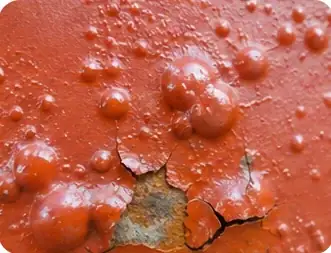
Surface preparation. Insufficient cleaning of the steel is probably the single most common cause. Water-soluble salts left on the surface are the worst case: they draw moisture through the dry film afterwards and lift it off as osmotic blisters. Salt testing before priming is the only way to catch this.
Condensation and dew point. The steel must be warm enough. The working rule is that the steel temperature stays at least 3 °C above the dew point during blasting and painting. Below that, moisture condenses on the surface. Painting over it causes blistering and delamination, and a freshly blasted surface flash rusts instead. Blasted steel is normally coated the same working day, before it starts to rust again.
Film thickness, both ways. Too thin and the protection is not there: a primer applied under thickness and then left exposed shows pinpoint rusting. Too thick is also a failure, not a safety margin. Above about 125 µm, primer films become prone to mudcracking, cohesive failure and eventually disbondment, and excess thickness can trap solvent so the coating never fully cures.
Overcoating intervals. Every product has a window within which the next coat must go on. Miss it and the next coat does not key to the one below, which shows up later as intercoat delamination. Zinc-rich coatings are particularly unforgiving about what goes over them and when.
Amine blush on epoxies. In cold or damp conditions a two-component epoxy may not react fully, and the amine hardener migrates to the surface as a greasy film. A topcoat applied over it will not adhere. It has to be washed off before overcoating.
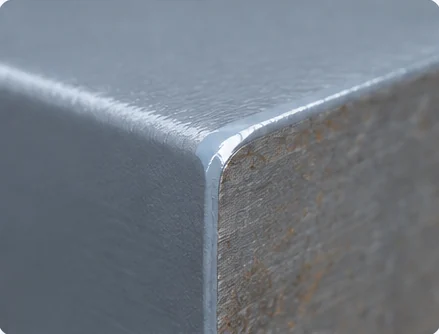
Edges, welds and bolts. Paint flows away from sharp edges as it cures, so the film is always thinnest exactly where exposure is worst. Corrosion starts at edges, weld toes, bolts and rivets before anywhere else. The answer is to dress sharp edges and weld spatter, then brush-apply a stripe coat into corners, edges and welds before each spray coat.
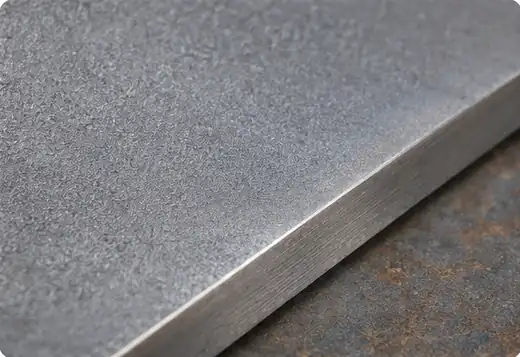
Blast profile. The profile must suit the system. If the peaks are too high for the film thickness, the tips protrude through the paint and rust through from those points.
Spray application. Dry spray, orange peel, runs, sags, pinholes and entrained air all come from gun distance, technique or conditions, and each leaves either a weak spot or a path to the steel.
| What you see | Usual cause | Prevention |
|---|---|---|
| Blisters | Soluble salts or moisture under the film | Salt test and wash before priming; respect the dew point rule |
| Pinpoint rusting | Primer under specified thickness, long exposure | Measure DFT; topcoat within the planned window |
| Mudcracking | Primer applied far too thick | Control wet film thickness during spraying |
| Intercoat peeling | Overcoating interval exceeded, or amine blush | Follow the product data sheet; wash off blush |
| Early rust at edges and welds | Thin film on sharp edges | Dress edges; apply a stripe coat |
| Rust spots on a sound-looking film | Blast profile peaks above the film | Match abrasive and profile to the system |
The practical point for a buyer: ask what the fabricator records, not what they promise. Air and steel temperature, relative humidity, dew point, blast grade, profile, and dry film thickness per coat are the measurements that decide whether a system reaches its durability range.
Two situations that come up again and again
Why shop primer fails before the topcoat arrives
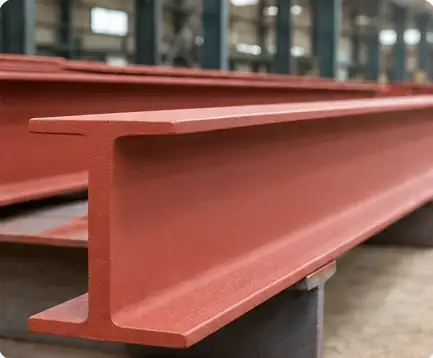
A common sequence on construction projects: the fabricator applies a shop primer, the steel then sits through months of site programme before the topcoats go on, and the primer is already failing by the time anyone looks at it. A review of shop coating failures in the protective coatings literature traced this to two opposite errors. Where the primer went on under its specified thickness and was then exposed for several months, pinpoint rusting appeared. Where it went on far too thick, above roughly 125 µm, the film mudcracked, failed cohesively and eventually disbonded, and the trapped solvent kept it from curing properly in the first place. The same review notes that surfaces contaminated with soluble salts before priming blistered badly once moisture reached them. The takeaway is about sequencing, not products. If the steel will be exposed for a long period before topcoating, the answer is to apply more of the system in the shop rather than relying on a thin primer to survive the wait, and to measure the primer thickness rather than assume it.
Why coatings fail at edges, welds and bolts first
Inspect any aging painted structure and the rust is in the same places: the edges of plates, the toes of welds, and around bolts and rivets. A technical note on coatings for hydraulic steel structures sets out why. Those surface irregularities are where corrosion concentrates, and edges and corners, being the most exposed, are the first to fail. The mechanism is simple: wet paint pulls back from a sharp arris as it cures, so the dry film over an edge is thinner than the film on the flat beside it, while the edge gets more of the weather. The fix happens before and during painting, not after. Sharp edges are rounded or dressed, weld spatter is removed, and a brush-applied stripe coat goes onto edges, welds and fasteners ahead of each sprayed coat. For high and very high durability in the aggressive categories, the standard formalises this by requiring preparation grade P3 to EN ISO 8501-3, which calls for a surface free of significant visible imperfections.
Paint for beams, platforms and architectural steelwork
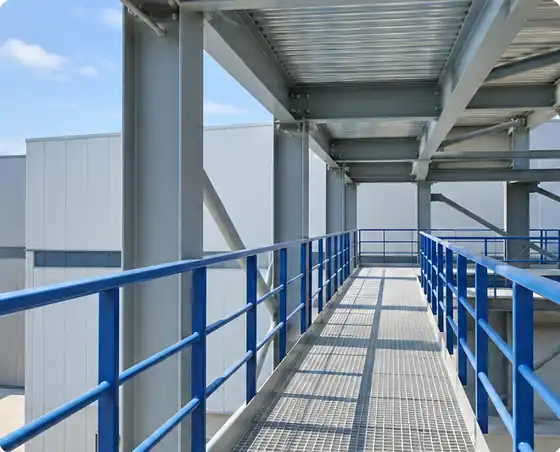
The same system logic applies, but the priorities differ.

Working with a fabricator in Turkey
Painting is part of fabrication, not a separate trade bolted on afterwards. Having the blast cleaning and the paint shop in the same facility as the welding means the steelwork is prepared and coated before it is handled again, and that the coating records arrive with the steel. Novelty Steel is a Turkey-based supplier of fabricated steelwork, painted in-house to the system the project specifies. Send the specification, the corrosivity category and the durability you need, or tell us the environment and we will quote a system against EN ISO 12944.
